


In a fascinating article published by Intelligent CEO, Jim Chappell, Global Director of AI at AVEVA, explains how industrial artificial intelligence is becoming a key driver for reconciling economic growth and environmental sustainability. Long seen as conflicting, these two goals are now moving in the same direction thanks to the power of AI, which is accelerating the implementation of solutions capable of addressing the climate emergency.
This transformation is already underway in factories around the world. According to a BCG study, 87% of industrial executives view AI as a key tool for combating climate change, and 43% plan to incorporate it into their sustainability strategies.
And this movement is not just theoretical: industrial AI is already helping companies make progress toward their net-zero goals, even in sectors that are the most complex to decarbonise. Beyond the “generative AI” phenomenon making headlines, manufacturers are deploying various forms of AI to integrate renewable energy into their processes, improve productivity, reduce energy consumption, make better decisions, and strengthen the resilience of their operations.
A new era is dawning: AI is no longer just a technological tool, but a true catalyst for sustainability in industry.
Now, let’s hear from Jim Chappell, who sheds light on how industrial AI is tangibly transforming sustainability in the industry.
What AI technologies are currently being used in industry?
Here are four major AI technologies that are now widely deployed in the industrial sector.
1. AI-driven predictive analytics
It enables companies to anticipate demand, optimise the supply chain, detect anomalies in assets, and adjust inventory levels in real time. Using statistical algorithms and machine learning technologies, historical and current data are analysed to predict future events, including trends in greenhouse gas (GHG) emissions. The result: reduced costs, more efficient use of resources, and a lower environmental impact associated with overproduction and waste.
2. Predictive Asset Optimisation
This approach combines dynamic simulation tools, predictive analytics, and advanced visualisation to create a hybrid digital twin. Manufacturers gain a comprehensive 360° view of operational risks, can identify issues earlier, and forecast the remaining useful life of equipment. In this way, they maximise availability, performance, and profitability. When integrated from the design phase of future equipment, this technology triggers a cycle of continuous improvement. In practical terms, it enables the accurate prediction of performance degradation and GHG emissions at the most granular level.
3. Generative AI
This is the most visible form of AI today, both in everyday life and in industry. Although the technology has existed for over 50 years, it is now truly coming into its own thanks to large language models (LLMs) available to the public. It helps operators quickly analyse vast amounts of information or serves as a creative partner for innovation: for example, simulating multiple design options for a piece of equipment based on specific constraints, or producing more engaging technical educational content. When combined with real-time data via specialised software, it also provides in-depth insights into complex topics such as sustainability analysis.
4. Grey-box modelling
This is one of the most advanced industrial AI technologies, having recently entered the market. It combines numerical models based on physical laws (white box) with AI models (black box), offering the best of both worlds. It enables the modelling of systems and processes in near real time to improve design and optimise operational performance. One of its key advantages is the ability to integrate AI models into traditional physical simulations via a simple drag-and-drop interface. AI often runs faster than purely physical models and requires fewer adjustments. As a result, companies can deploy their models more quickly, using less computing power and thus reducing their carbon footprint.
What benefits does AI bring to industries?
Industrial AI solutions make it possible to contextualise key performance and sustainability data by combining it with AI and human expertise. As a result, companies can create value and make progress toward their environmental goals, both today and in the future.
In the energy sector, AI plays a vital role in the transition to renewable energy. The Italian group Enel, committed to fully decarbonising its energy mix by 2040, has already installed more than 50 GW of renewable capacity. To accelerate this transformation, Enel uses AI-based asset performance management software coupled with predictive analytics. Data silos have been eliminated, which speeds up decision-making and improves the efficiency of the entire ecosystem. The group is now able to predict asset failures and ensure constant energy availability. It is thus moving toward the goal of a fully autonomous power plant.
Another global energy company is also using predictive asset optimisation to improve the reliability of its facilities and reduce maintenance costs. A single analysis detected a performance anomaly in the heat recovery pipes of a cogeneration unit… five months before the failure, resulting in significant savings. Since 2019, the software has identified more than 1,700 anomalies, generated over $37 million in savings, reduced unplanned downtime, and lowered resource consumption, thereby contributing to a lower environmental impact.
AI also generates significant benefits in other sectors that are difficult to decarbonise, such as the cement industry, which accounts for 6% of global human-caused emissions. Oyak Cement, with operations spanning from Turkey to Portugal, including Cape Breton and West Africa, uses an AI-enhanced edge-to-cloud data management system to replace 30% of its fossil fuel energy with renewable sources and reduce its energy consumption. Every 1% reduction in energy use translates to savings of between 5 and 7 million euros. With real-time data, the company is also reducing its CO₂ emissions and ensuring regulatory compliance.
At an even more fundamental level, AI enhances resilience against the effects of climate change. In the city of Salem, Oregon, rising temperatures have led to an increase in toxic algal blooms in lakes and rivers. Using a multi-tenant cloud-based data management platform, city officials have centralised numerous sources of information: algae levels, water depth, weather data, satellite imagery, and more. Predictive analytics now alert the city two weeks before a spike in cyanotoxins and harmful algae. This helps protect water quality and ecosystems and ensures access to safe drinking water for the five million residents of the Salem region.
Has industrial artificial intelligence become indispensable for a successful transition to sustainability?
The industrial world is now entering what many describe as a true AI revolution.
Reducing AI to a mere tool for boosting profits would be to underestimate (and underutilise) the full potential of this field. As industrial companies seek to embed sustainability at the heart of their operations, AI finally enables them to align economic performance with environmental responsibility.
AI alone will not solve the climate crisis, but it can create more value while improving sustainability. Success, of course, depends on the time invested, the efforts made, and how the technologies are applied.
But one thing is now clear: reconciling sustainability and profitability is no longer an unattainable goal. Thanks to its ability to optimise processes, improve efficiency, and promote greener practices, industrial artificial intelligence acts as a powerful bridge between these two ambitions—which once seemed at odds—and paves the way for the industry we need for tomorrow.
And what about AVEVA software in all of this?
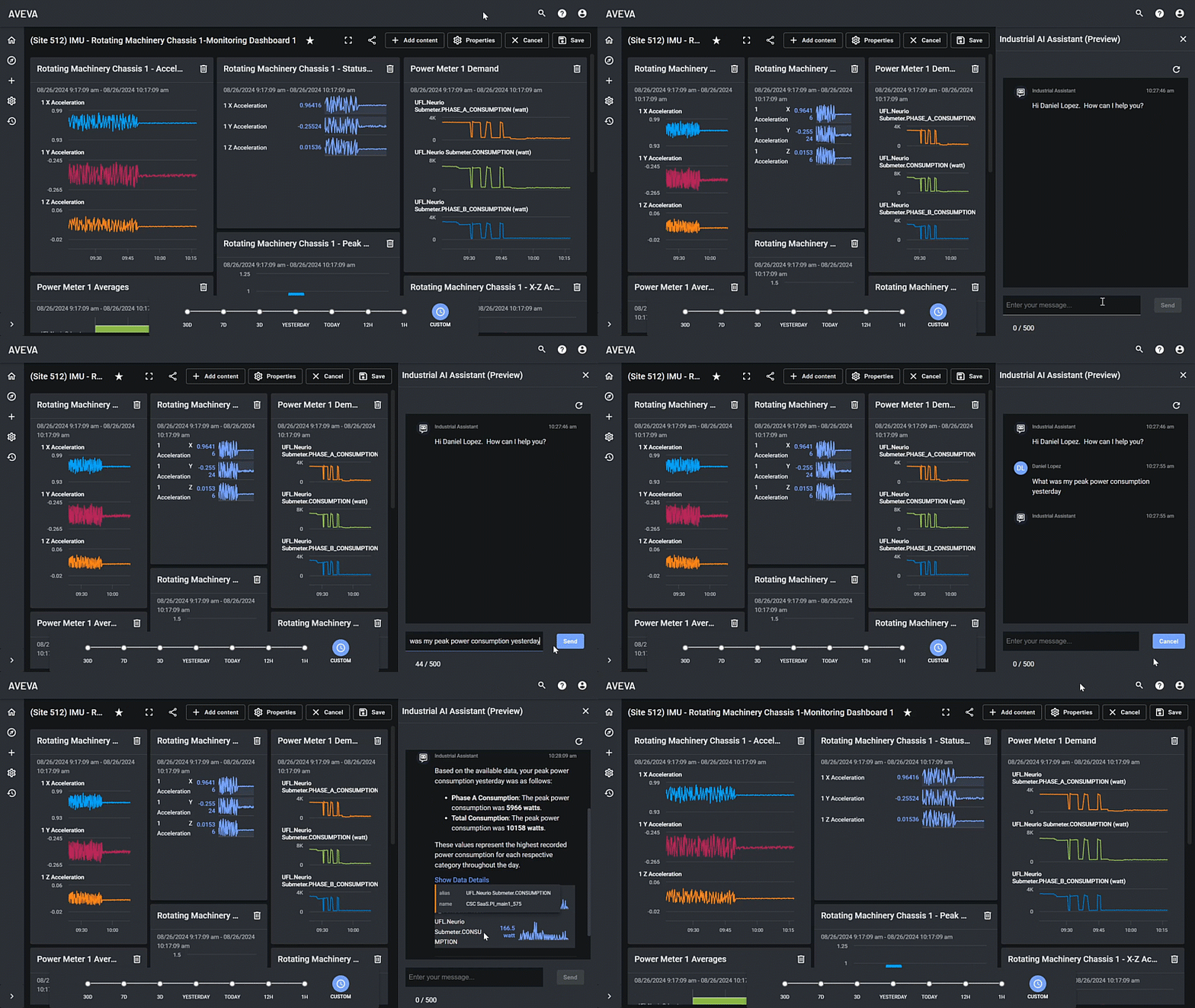
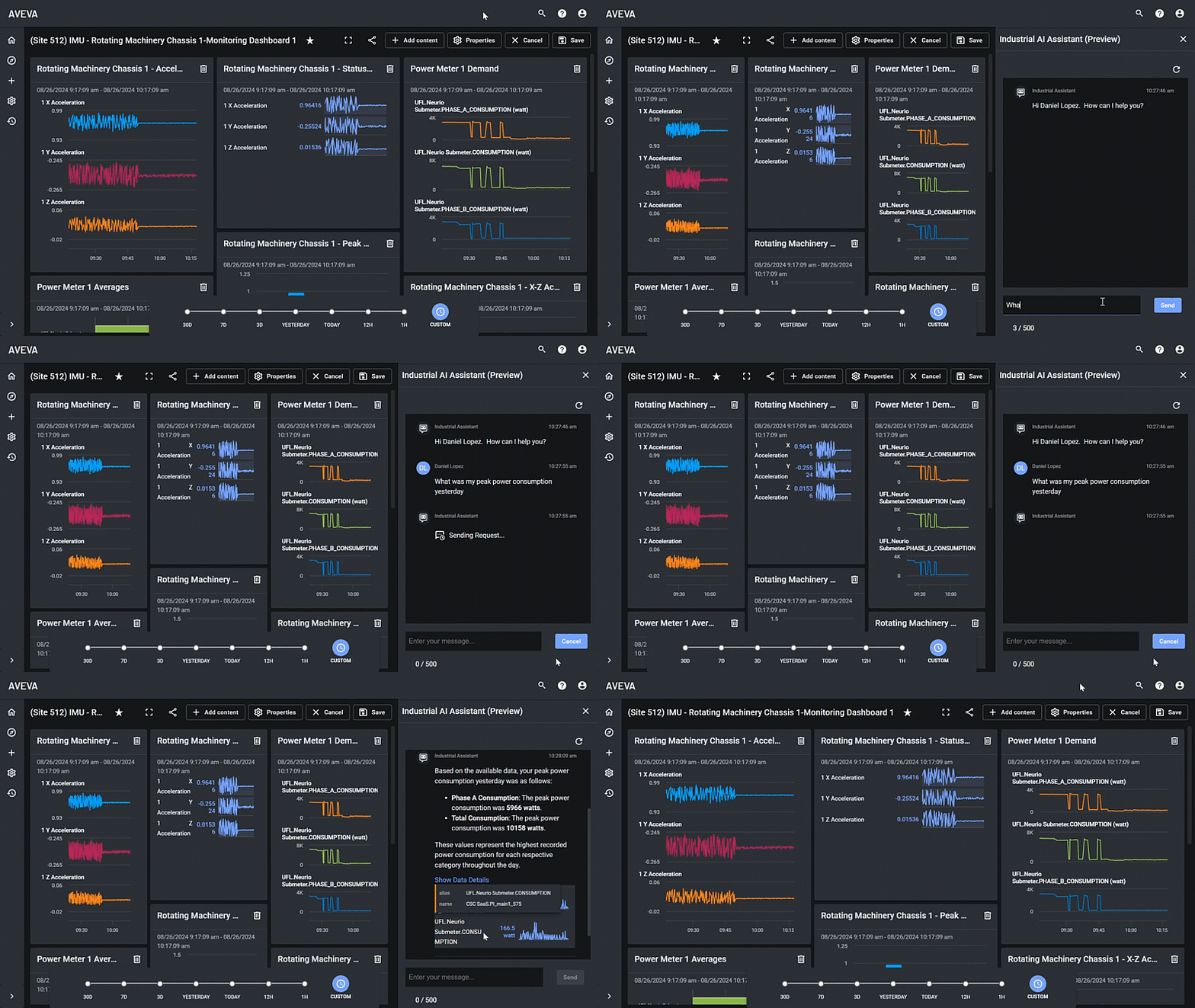
In this transition toward a more sustainable industry, AVEVA software plays a key role by making industrial artificial intelligence accessible, operational, and directly connected to on-the-ground realities. Thanks to the AVEVA CONNECT platform and the AI integrated into its monitoring, engineering, asset management, and performance optimisation solutions, manufacturers can leverage their data to reduce energy consumption, anticipate deviations, improve operational efficiency, and accelerate the decarbonization of their facilities.
In other words, AVEVA’s AI does more than just analyse: it helps plants make better decisions, operate more intelligently, and sustainably align economic performance with environmental responsibility. This is how it becomes a true driver of sustainability, capable of guiding the industry toward net-zero.





![[Interview] How does AVEVA support the cosmetics and pharmaceutical industries in their digitalization?](https://on.factorysoftware.com/hs-fs/hubfs/FSO/Blog_2024/ENG/digital-transformation-life-sciences.jpg?width=680&height=460&name=digital-transformation-life-sciences.jpg)