Composable Manufacturing: A Faster Path to MES Value
Manufacturers face constant pressure to produce faster, reduce errors, improve traceability, and keep systems secure, all while managing a shrinking pool of skilled labor. Traditional MES projects rarely help. Requirements balloon, specifications multiply, and businesses often wait a year or more to learn whether a solution actually works.
Composable manufacturing offers a different path.
Solve One Problem at a Time
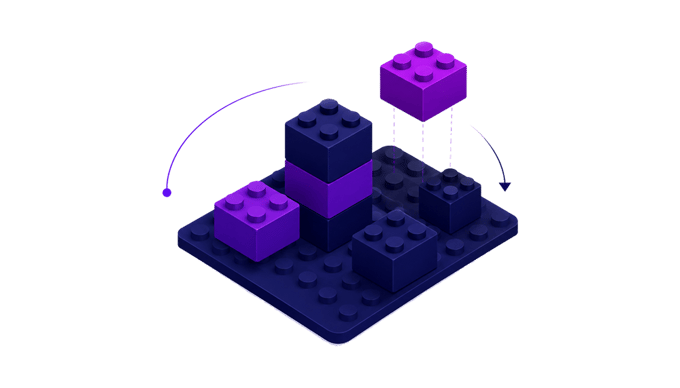
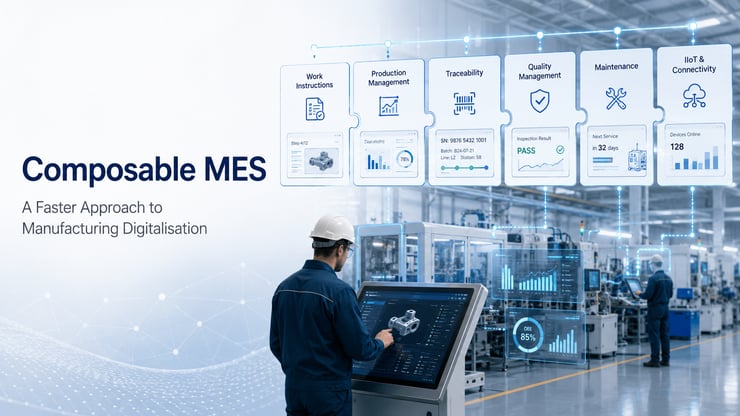
Rather than designing a single system to address every manufacturing challenge from day one, composable manufacturing starts with a specific, high-value problem, better digital work instructions, improved traceability, or more consistent quality checks on one line, and builds from there using smaller, pre-built applications.
As Eric Van Nispen explains in a webinar, this approach can get an application live within months, not years. The core question shifts from "How do we redesign our entire manufacturing system?" to "What is the biggest problem we could solve first?"

Start Small, Prove Value, Then Expand
The first project doesn't need to be the final system. Manufacturers can implement one or two use cases, demonstrate value, and then expand, either by rolling the same application out to more lines and plants, or by adding new applications to tackle the next challenge.
This mirrors the shift away from "big bang" implementations. Instead of defining every requirement upfront, teams go live with a small set of high-value use cases, validate the approach internally, and build incrementally, reducing both the size and risk of the initial investment.
On the Shop Floor
In practice, this means operators receiving work orders, following digital instructions, scanning components, validating materials, and logging defects, with lot and batch data captured automatically. Platforms like Tulip also connect directly to equipment, verifying correct tool use, capturing torque data, and even halting a tool if a step is performed incorrectly. The result is a process that actively guides operators while building in traceability as a byproduct of the work itself.
Where AI Fits
AI is useful for building and adapting applications, not for replacing the platform itself. The underlying system still needs to handle security, updates, and maintenance; taking that on internally effectively turns a manufacturer into its own software vendor. The more practical use of AI is higher up the stack: generating new applications or use cases from requirements when a pre-built option doesn't already exist, cutting development time significantly.
The Real Question
Rather than asking whether they need an MES, manufacturers may be better served asking: where would a small digital improvement make the biggest difference today? Find that use case, implement it, measure the results, then decide what's next.
Our webinar, What if Composable Applications could change the way you deliver
MES?, features Eric Van Nispen on how AVEVA Composable MES and Tulip support this approach, with practical examples spanning digital work instructions, traceability, connected tools, and AI-assisted development.